WP2
Medical and Hygiene
Health infrastructures, welfare provision, and industrial medicine
Overview
This work package examines the conditions that harmed miners’ bodies across Europe’s major twentieth-century coalfields, and the architectures—both above and below ground—developed to protect, alert, save, diagnose, and treat them.
Coal mining exacted a severe physical toll. Miners faced daily exposure to dust and dirt, alongside specific occupational diseases such as pneumoconiosis (black lung) and nystagmus, as well as widespread rheumatism, dermatitis, and injuries from frequent accidents. These conditions extended beyond the individual miner into the domestic sphere: the labour of cleaning bodies, clothing, and homes fell disproportionately to miners’ wives and daughters, exposing them to health and safety risks of their own, from scalding to respiratory harm caused by coal dust and drying fumes.
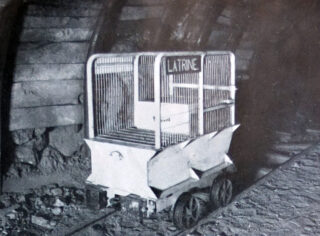
Medical and hygiene traces the architectural and infrastructural responses that emerged to address these conditions, including sanitary facilities, health centres, mobile and fixed therapeutic units, laboratories, convalescent homes, hospices, and hospitals. Alongside this broader network, the research examines pithead baths as a particularly formative element in the development of colliery hygiene. Made compulsory in Belgium, France, and Germany in the early 1900s, and adopted at scale in the United Kingdom during the 1920s and 30s, these often architecturally ambitious buildings enforced strict separation between “clean” and “dirty” zones—aligning the management of miners’ bodies with modernism’s broader preoccupation with cleanliness, order, and standardisation. This work package offers the first comparative analysis of the architecture, spatial organisation, and social context of these buildings across Europe.
By mapping relationships of influence in form, space, and aesthetics between national programmes, this research reconceptualises the wider development of hygienic and medical infrastructure as a pan-European ecology. It reveals how this network helped shape a managed approach to sanitary health and occupational medicine, not only for mining communities but for working-class populations across Europe more broadly.
Situating architecture as an active agent in managing environmental and bodily risk, this thematic work package connects modernist engineering and design—ventilation systems, hygiene architectures, mobile diagnostic units—to broader questions about the relationship between extractive industry, labouring bodies, and public health that remain urgent today.
Other Work Packages
WP1
Settlements and HousingPlanned towns, workers’ housing, and domestic life in coal regions.
WP3
Education and ExchangeTraining, expertise, and the circulation of knowledge across borders.WP4
The Modernised IndustryIndustrial architecture, technologies, and systems of production.WP5
Excavating the CoalscapeLandscapes of extraction, infrastructure, and environmental change.